The Child
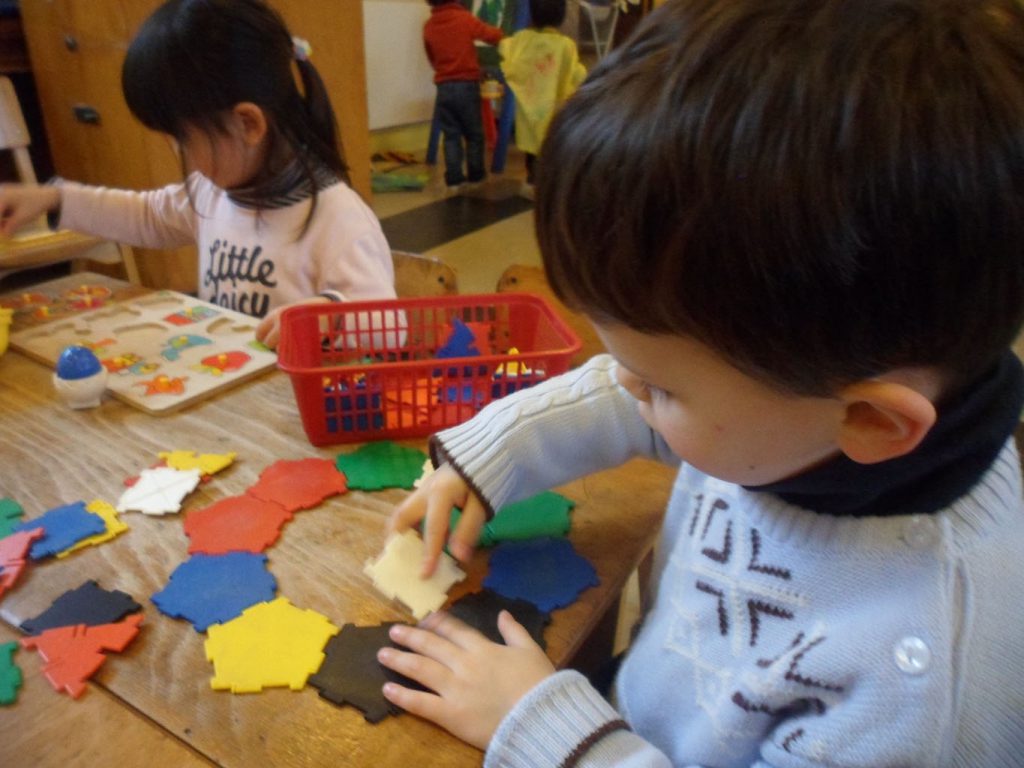
All growth must come from the actions of the children themselves.The Montessori method takes into account the sensitive periods of the child. The children are encouraged to refine their senses through working with the specifically designed materials, in groups, individually and with their teacher. The children are also encouraged to move freely around the classroom, working on the mats, table, outside and selecting materials which capture their interest. Respect for others is reinforced throughout the day.
The Directress
A Montessori ‘teacher’ is called a Directress. This is because she aims to guide the children into constructive work and to direct them into acquiring both love for learning and self-motivation. Especially trained to observe, to respond to the needs of each child and to direct the whole group, they do not teach in the traditional sense, but rather guide each child forward. The Directress is not a powerful figure, but complements the children’s environment by preparing it and helping them to care for it. She ensures that each member of the school community is respected, and shows individual children how to use the educational material most appropriate to their stage of development.
The Classroom
This room is a child-size world, with chairs, tables and shelves, in appropriate size. It is a unique feature of the ‘prepared environment’ that every object in the classroom has a specific place and purpose.
Educational Support
Each child’s learning requirement is supported appropiately within the classroom. Children benefit particularly in the early years, from the multi-sensory approach employed by the Montessori method of education. Staff work closely with parents and where necessary, liaise with external advisors such as educational psychologists or speech and language specialists. Each child has a learning journey folder and a forward plan where achievements are recorded and monitored.